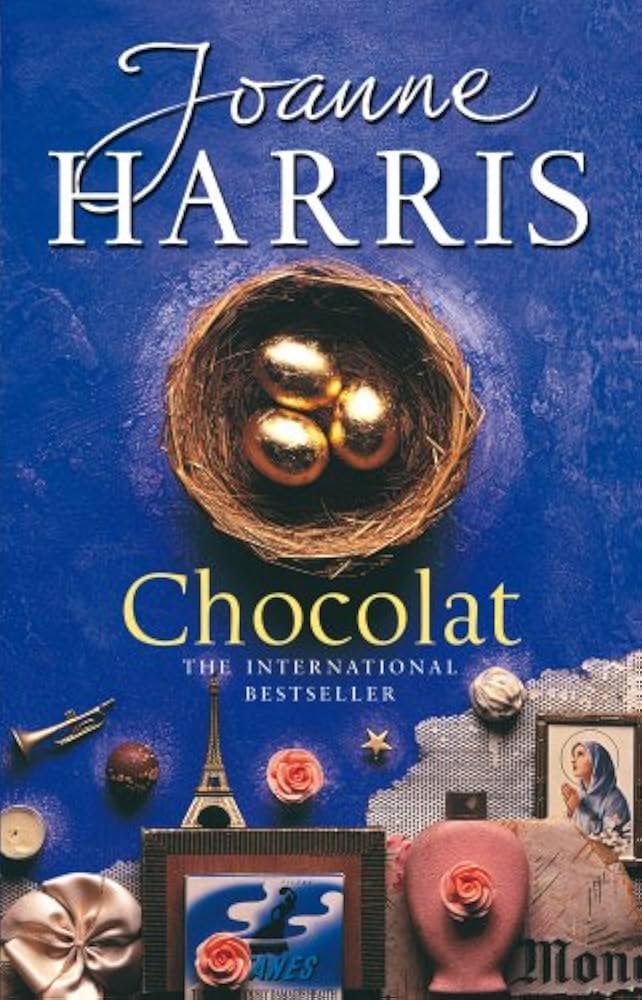
Few books capture the senses as vividly as Chocolat by Joanne Harris. This novel is a feast for the imagination, steeped in the aromas of cocoa, the warmth of a small French village, and the clash of tradition against temptation. First published in 1999, Chocolat remains a timeless tale of magic, rebellion, and self-discovery.
I was given this book for Christmas from my mum many, many years ago, and to this day, it remains an all-time favourite. Joanne Harris is a one-click author for me. It’s one of the only books where I also actually adore the movie.
At its heart, the story follows Vianne Rocher, a free-spirited chocolatier who arrives in the sleepy village of Lansquenet-sous-Tannes with her daughter, Anouk. Their presence disrupts the rigidly structured town, especially when Vianne opens her chocolate shop at the beginning of Lent, a time of fasting and abstinence. Opposing her is the town’s conservative priest, Francis Reynaud, who views her as a dangerous outsider tempting his flock. As Vianne works her quiet magic through her confections, the town’s residents begin to rediscover joy, passion, and a little defiance against societal constraints.
Harris’s writing is lush and evocative, bringing Vianne’s world to life with a sensory richness that makes you crave chocolate as you read. The novel weaves together themes of acceptance, transformation, and the power of kindness, all wrapped in a slightly mystical aura. There’s an undercurrent of magical realism—Vianne seems to possess an intuitive ability to understand exactly what people need, though whether it’s actual magic or simply deep empathy is left for the reader to decide.
The novel also explores the weight of personal history. Vianne is a woman constantly on the move, shaped by a past of wandering, while Reynaud is shackled by his past and his fear of change. The supporting cast of townspeople—from the repressed, battered Josephine to the fiercely independent Armande—adds layers of depth, making Lansquenet feel like a place you know intimately.
One of the most compelling aspects of Chocolat is its subtle but pointed commentary on religion and morality. The battle between indulgence and restraint, joy and guilt, is central to the novel. Harris doesn’t vilify faith but rather critiques the kind of rigid belief that suffocates rather than uplifts. In the end, the story is less about chocolate and more about choice—the choice to live freely, to embrace pleasure without shame, and to stand against intolerance.
For those who have only seen the 2000 film adaptation starring Juliette Binoche and Johnny Depp, the book offers a richer, more nuanced experience. The novel’s ending differs significantly, and Vianne’s internal struggles are more pronounced, making her journey all the more compelling.
If you enjoy atmospheric, character-driven stories with a touch of the whimsical, Chocolat is a must-read. It’s a novel to savor, much like the confections it describes—rich, slightly bittersweet, and utterly satisfying.
The new book in the series is due to release this year, and I’m so, so excited.
 Books, Boots and Bakeries
Leave a comment